Roofing · 2 min read
Gutters and guards sized for Bay Area storms
Atmospheric rivers, hillside lots and tree cover make gutters matter here. How to size, pitch and protect a system that keeps water away from the building.
By The Skyline team · · Updated
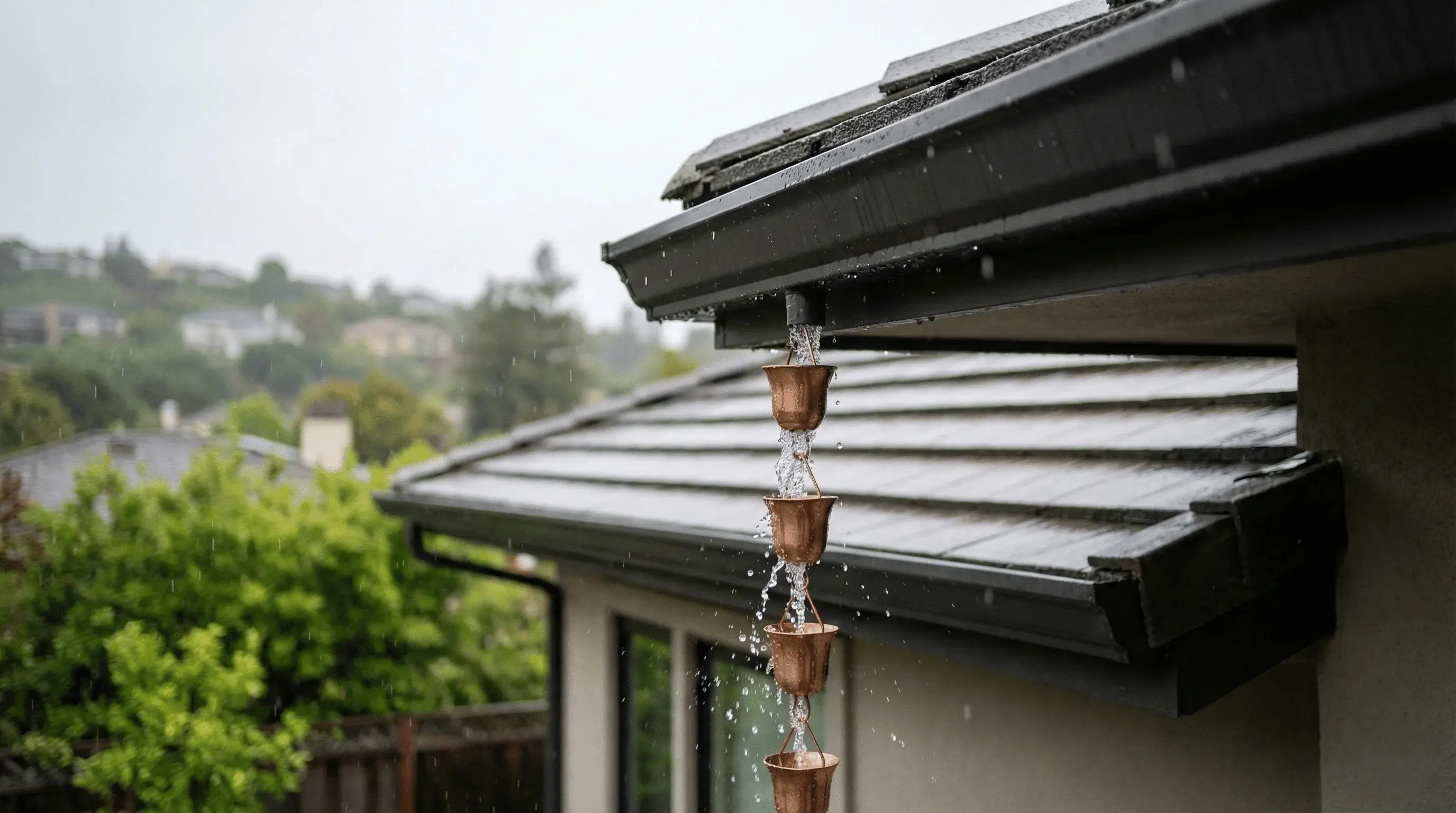
A roof collects every drop that falls on it. Gutters decide where that water goes next — into a drain line and away from the building, or down the stucco, into the crawlspace and against the foundation. On sloped Bay Area lots with clay soils and retaining walls, that decision matters.
Gutter profiles and materials

- Seamless aluminum K-style — the workhorse for most homes. Formed on site to exact lengths, so there are no seams along the run.
- Steel and copper — heavier and more durable; copper for historic homes and high-end projects.
- Half-round — the traditional profile for Victorian and Edwardian houses.
- Box gutters — built into the roof edge on some older and modern buildings, and best treated as part of the roof waterproofing.
Getting the system right
- Size for the roof, not the house. Gutter and downspout sizes should match the roof area draining to them and how steep it is. Big, steep roof planes concentrate a lot of water.
- Enough downspouts, in the right places. Long runs need more than one outlet. Inside corners and valleys concentrate flow.
- Pitch toward the outlets. Gutters need a slight, consistent fall so water doesn’t sit.
- Discharge away from the building. Downspouts should tie into drain lines or splash well clear of foundations and walkways — never onto a neighbor’s property.
- Integrate with the roof edge. Drip edge should lap into the gutter so water goes in it, not behind it.
Gutter guards
Guards keep leaves, needles and debris out so water can flow during heavy rain. The right type depends on what falls on your roof:
| Guard | Good for |
|---|---|
| Micro-mesh | Fine debris like pine needles and seeds |
| Perforated metal | General leaf cover |
| Hooded / reverse-curve | Large leaves; check performance in heavy downpours |
No guard is maintenance-free, but the right one dramatically reduces how often you need to clean.
Signs it’s time for new gutters
- Overflow during moderate rain
- Peeling paint or rot on the fascia
- Sagging sections or pulled-out hangers
- Rust, or leaks at corners and seams
- Water staining on siding below the gutter line
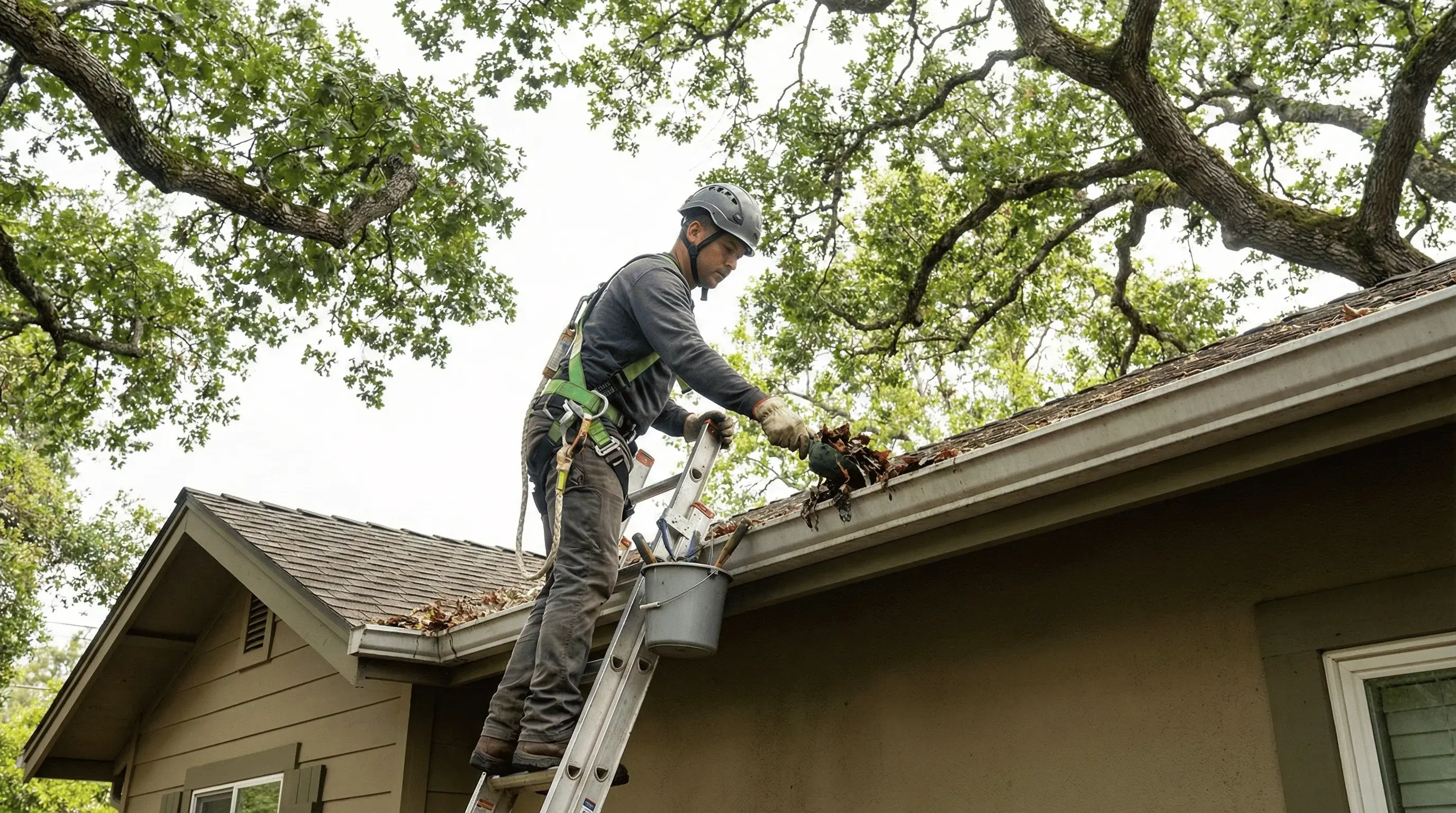
Clean gutters at least once a year — twice with heavy tree cover — and have them checked as part of your annual roof inspection. Need new gutters or guards? Request an estimate.
Related services
Talk to someone who’s been on the roof.
Free assessments across the Bay Area. Written, fixed-price proposals.
Request an assessmentor call (415) 209-5199