Concrete & clay tile roofing
Tile itself can last for generations. The underlayment beneath it can’t. Most tile roof leaks come from underlayment that has reached the end of its life while the tile still looks fine.
We install new tile roofs and “lift and relay” existing ones — removing the tile, installing new heavy-duty underlayment and flashings, and reinstalling sound tile with replacements matched as closely as possible.
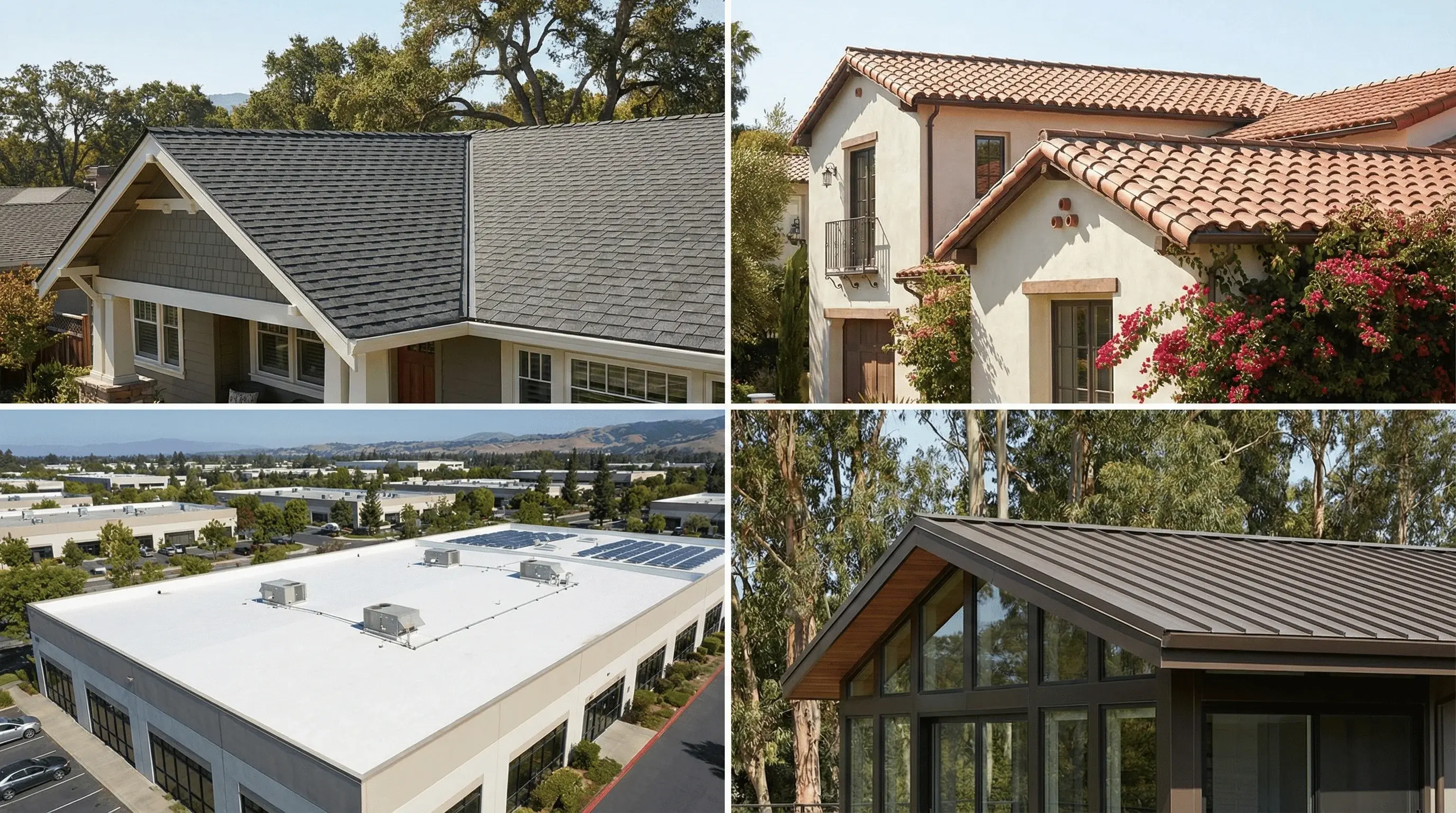
Concrete or clay tile roof system
- Mediterranean and Spanish-style homes
- Re-underlayment of existing tile
- New construction
- Tile repairs and replacement
Done right the first time — and built to last.
Longevity
Concrete and clay tile offer very long service lives on properly engineered structures.
Fire resistance
Tile is noncombustible, and tile assemblies are commonly Class A rated.
Re-underlayment option
Keep the tile you love and replace the layer that actually keeps water out.
Structure checked first
We verify the roof framing can carry tile weight before we quote it.
Concrete or clay tile roof system
On a tile roof, the tile sheds water and the underlayment keeps it out. We treat the layer you can’t see as the one that matters most.
Layer by layer, from the substrate up
- 01Roof deckStructure verified for tile weight
- 02Heavy-duty underlaymentThe true waterproofing layer under tile
- 03Valley & wall flashingsMetal sized for tile profiles
- 04Battens (where specified)Support tile and promote drainage
- 05Concrete or clay tileFastened for Bay Area wind exposure
Our process
01
Assess tile and structure
Count broken tile, check underlayment age and confirm structural capacity.
02
Remove and stage
Tile carefully removed and stacked on the roof or site for reuse.
03
Underlayment and flashings
New heavy-duty underlayment, valley metal, wall flashings and eave closures.
04
Reinstall and replace
Sound tile relaid and fastened; broken tile replaced with the closest available match.
What we check on every job
- Underlayment rated for tile roofs — never the lightest available
- Valley and wall metal sized for the tile profile
- Fastening appropriate for wind exposure
- Walk on tile only where it’s supported, to avoid breakage
Tile: questions & answers
Straight answers from the people who do the work.
Can my existing tile be reused?
Usually most of it. Some tile always breaks during removal; we include a replacement allowance and match color and profile as closely as possible.
Why does my tile roof leak if the tile looks fine?
Because the tile sheds water but the underlayment keeps it out. Once the underlayment fails, water that gets past the tile reaches the deck.
Read before you decide
Roofing · 2 min read
What a professional roof inspection should cover
A roof inspection is more than a look from the ladder. The Bay Area checklist we follow, what the report should include, and when to schedule one.
Roofing · 2 min read
Gutters and guards sized for Bay Area storms
Atmospheric rivers, hillside lots and tree cover make gutters matter here. How to size, pitch and protect a system that keeps water away from the building.
Roofing · 2 min read
Repair or replace? What your roof really needs
Many leaking roofs need a repair, not a replacement. The signs that point each way, what a replacement includes, and how to spot an upsell.
Let’s keep the water out — for good.
Tell us what’s going on. We’ll inspect, explain what we find with photos, and give you a written, fixed-price proposal — usually within 48 hours of the visit.