Leak investigation & water testing
Water rarely shows up where it gets in. It runs along framing, membranes and sheathing and appears somewhere else entirely. Patching the stain doesn’t fix the leak.
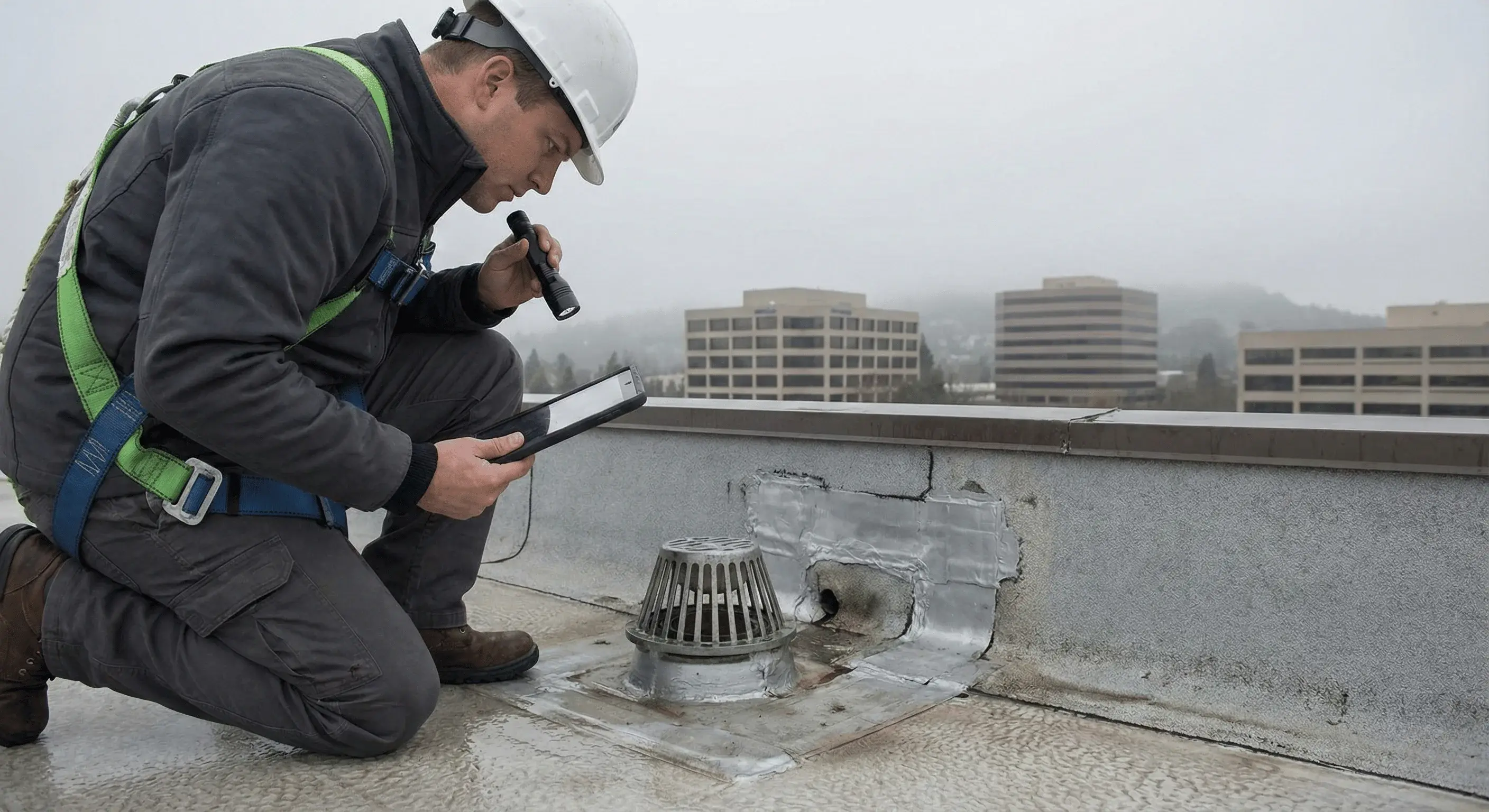
We investigate methodically: isolate areas, test them one at a time with controlled water, and document what we find. Then you get a repair scope based on evidence — and a test to prove the fix worked.
- Chronic leaks that have been “fixed” before
- Leaks below decks, balconies and roof decks
- Window, door and wall-to-deck transitions
- HOA and property-manager investigations
- Pre-purchase or pre-renovation assessments
Built to stay watertight, not just look finished.
Evidence, not guesses
Controlled, sequential water testing isolates the actual entry point instead of assuming.
Documented findings
Photos, test locations and results in a written summary your board, manager or insurer can use.
A fix you can verify
After repairs, we retest the same area under the same conditions to confirm it’s dry.
One team for the whole envelope
Roofs, decks and the transitions between them are where leaks hide — and we work on all of them.
Our process
01
Interview and inspect
When does it leak, in what weather, and where does it show? Then a close inspection of every likely path above and around it.
02
Isolate and test
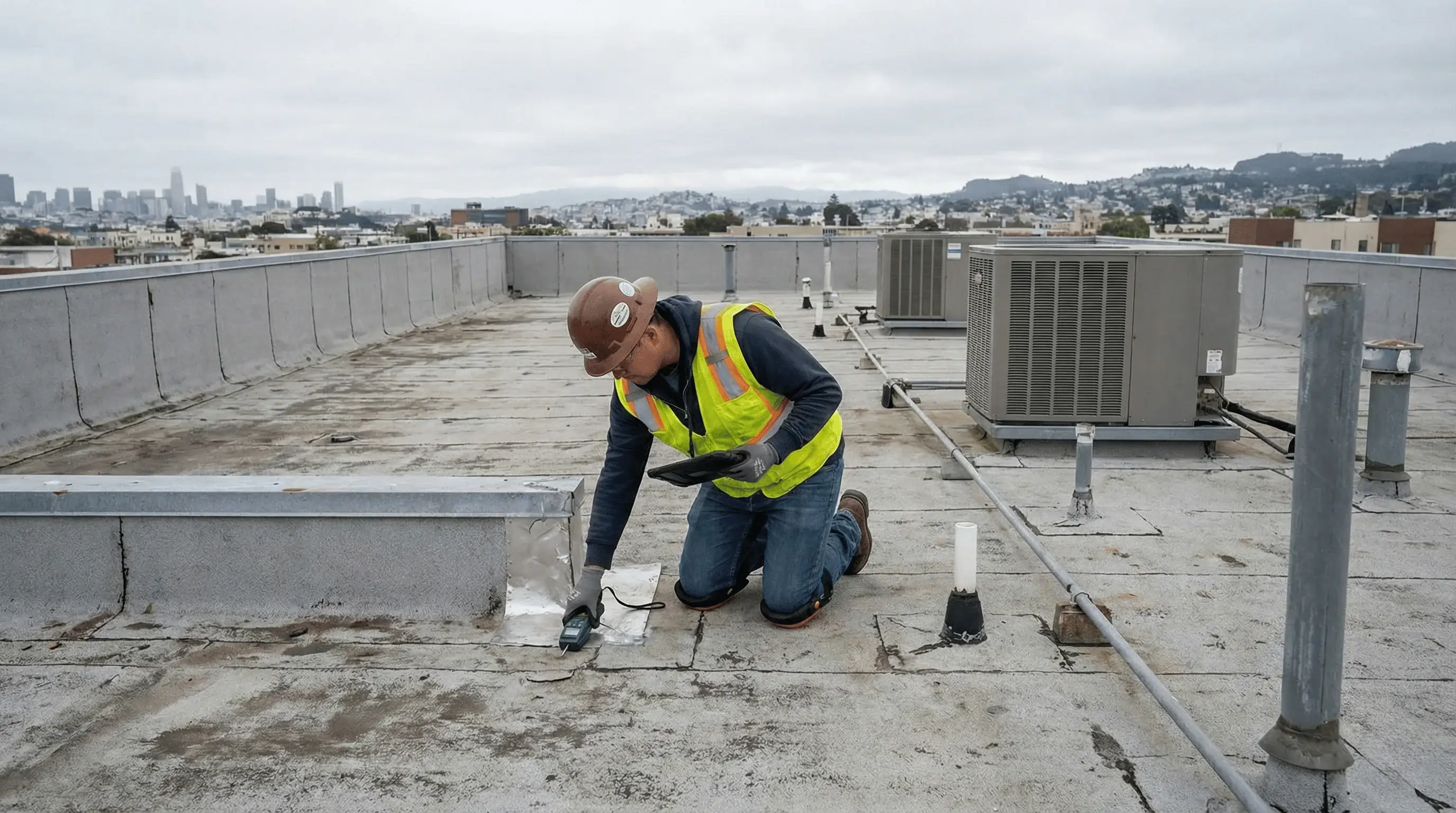
Mask off areas and test them one at a time — low on the building first, working up — with timed, controlled water.
03
Report
You receive photos, findings and a repair scope ranked by priority.
04
Repair and retest
We repair the source and repeat the test that found it, so you know it’s fixed.
What we check on every job
- Test from the bottom up, one variable at a time
- Timed water exposure recorded for each test area
- Interior observation during every test
- Retest after repair under the same conditions
- Flood test (ASTM D5957) for horizontal membranes where appropriate
Leak investigation & testing: questions & answers
Straight answers from the people who do the work.
Why does my leak only happen in some storms?
Wind direction and rain intensity change where water hits the building. A leak that appears only in a southwest storm is a clue, and we design the water test to recreate it.
Can you investigate without opening walls or ceilings?
Often, yes. Controlled water testing and careful observation usually locate the source. Sometimes a small inspection opening is the fastest path to a definite answer; we’ll ask first.
Do you only work on your own installations?
No. Much of our investigation work is on roofs and decks installed by others, including SB 721 and SB 326 follow-up work.
Read before you decide
Waterproofing · 3 min read
SB 721 and SB 326 balcony laws for Bay Area owners
Both first-round balcony inspection deadlines have passed. What SB 721 (apartments) and SB 326 (condos and HOAs) require, and how waterproofing fits the repair.
Waterproofing · 2 min read
Flood tests before waterproofing is covered
Once tile, pavers or soil go down, a membrane defect is expensive to find. How ASTM D5957 flood testing and ASTM D7877 electronic leak detection work.
Waterproofing · 2 min read
The seven details where deck waterproofing fails
Most leaking decks fail at doors, walls, drains, posts and edges, not in the middle. Seven details we check first, and how they should be built.
Let’s keep the water out — for good.
Tell us what’s going on. We’ll inspect, explain what we find with photos, and give you a written, fixed-price proposal — usually within 48 hours of the visit.