Roofing · 3 min read
Title 24 cool roofs and solar-ready roofing
When California’s energy code requires a cool roof, what “cool” means, how Bay Area climate zones change it, and how to plan a roof around future solar.
By The Skyline team · · Updated
California’s energy code (Title 24, Part 6) sets minimum reflectance for many new roofs and reroofs. Whether yours needs a “cool roof” depends on four things: the type of building, the slope of the roof, the climate zone and how much of the roof you’re replacing. Here’s how that plays out in the Bay Area.
Code cycles
The 2025 Energy Code applies to permits applied for on or after January 1, 2026. The cool-roof values below carried over from the 2022 code for nonresidential buildings. Always confirm with your building department — local amendments exist.
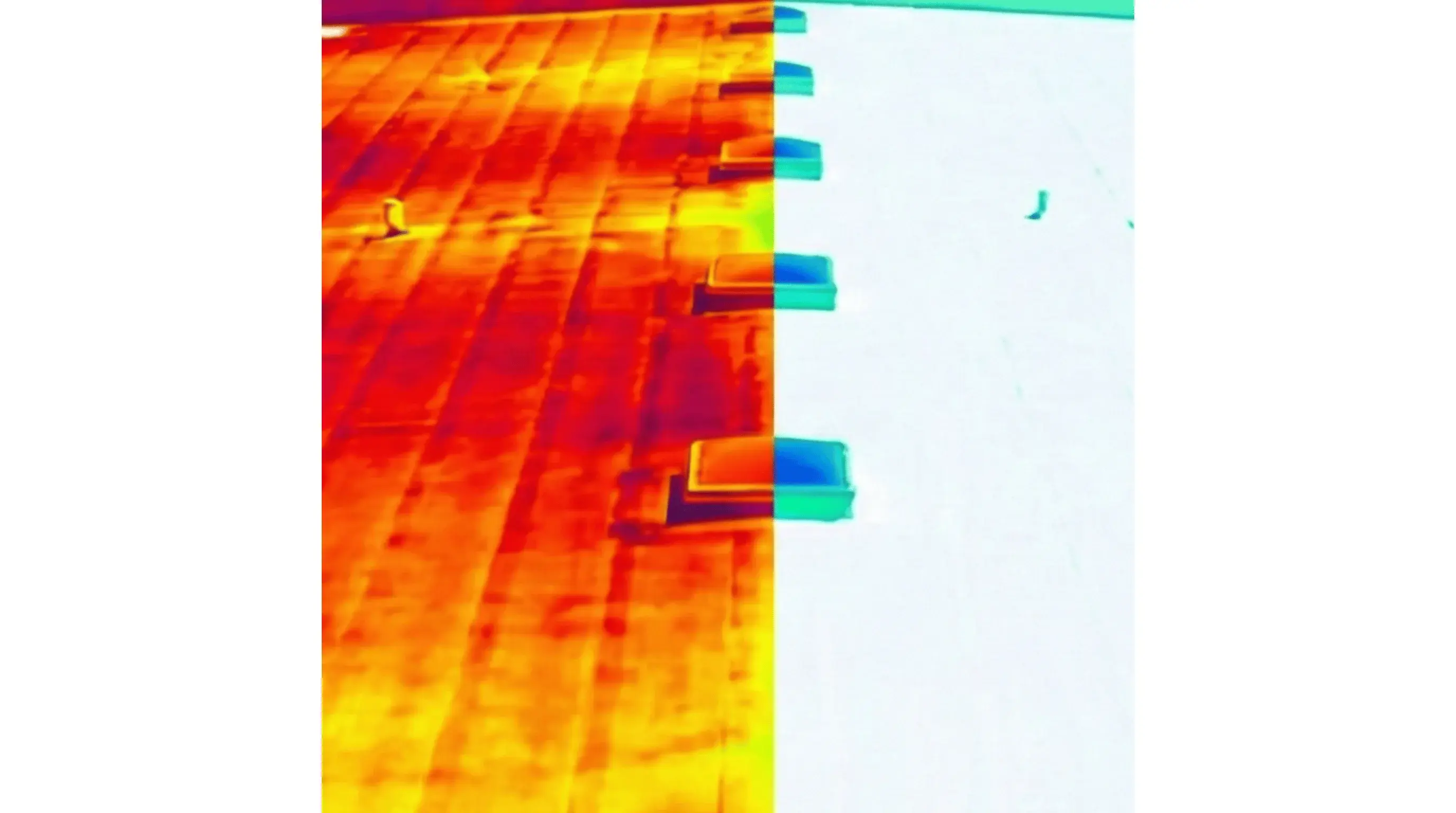
What makes a roof “cool”
Two measured properties:
- Solar reflectance — how much sunlight the surface reflects (0 to 1)
- Thermal emittance — how readily it sheds the heat it does absorb (0 to 1)
Together they can be expressed as a Solar Reflectance Index (SRI). Title 24 uses aged values — measured after three years of weathering — and requires products to be rated and labeled by the Cool Roof Rating Council (CRRC).
Nonresidential buildings
For nonresidential reroofs, the requirement is triggered when more than 50% of the roof, or more than 2,000 square feet — whichever is less — is replaced, recovered or recoated.
| Roof | Climate zones | Aged reflectance | Emittance | or SRI |
|---|---|---|---|---|
| Low-slope (under 2:12) | All | 0.63 | 0.75 | 75 |
| Steep-slope | 1 and 3 | 0.20 | 0.75 | 16 |
| Steep-slope | 2 and 4–16 | 0.25 | 0.80 | 23 |
There are exceptions — for example, roof area under integrated solar panels, and heavy roofs over a certain weight — and an insulation trade-off for low-slope roofs that can’t meet the reflectance.
Single-family homes
For homes, the climate zone matters more. When more than half the roof is replaced, cool-roof requirements apply to steep-slope reroofs in climate zones 4 and 8–15, and to low-slope reroofs in zones 4 and 6–15, with alternatives such as added attic insulation or a radiant barrier available for steep-slope roofs.
In practice, that means a reroof in a San Francisco or Oakland neighborhood (climate zone 3) often has no cool-roof requirement, while one in San Jose (zone 4) often does. Climate zones are mapped by address, so we check yours before we quote.
Does a cool roof still make sense in the fog?
Often, yes. Even foggy neighborhoods get strong afternoon sun, and a reflective surface runs cooler, which reduces heat stress on the roofing itself. On flat roofs, white membranes and coatings are the standard choice anyway.
Planning a solar-ready roof
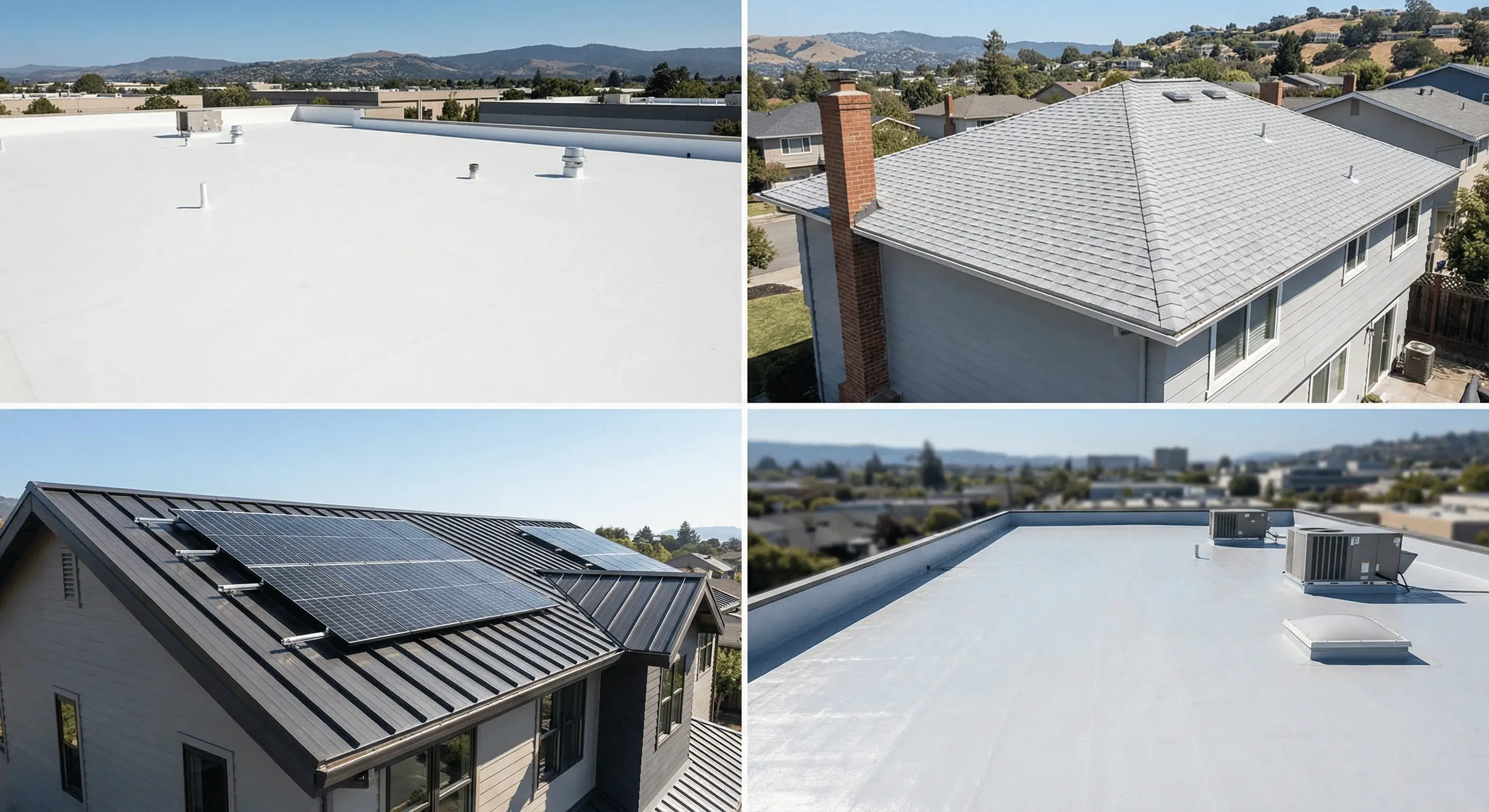
If solar is in your plans, the new roof is the moment to prepare for it:
- Sequence it right. Replace the roof before panels go on — removing and reinstalling an array later is expensive.
- Plan attachment zones. Mark framing and attachment areas, and keep walkways and fire setbacks clear.
- Flash attachments into the roof system. On shingle roofs, use flashed mounts; on standing seam metal, seam clamps avoid penetrations entirely.
- Choose a long-life roof. The roof under an array should last as long as the panels.
- Document it. Layout notes help your solar installer protect the roof — and its warranty.
How we handle it
We check the climate zone and trigger for your project, specify CRRC-rated products where required, prepare the energy-code paperwork for the permit, and coordinate with your solar installer. Request an assessment and we’ll tell you exactly what applies to your roof.
Talk to someone who’s been on the roof.
Free assessments across the Bay Area. Written, fixed-price proposals.
Request an assessmentor call (415) 209-5199