Waterproofing · 2 min read
Is a roof coating right for your flat roof?
Silicone and elastomeric coatings can add years to a sound flat roof, or trap water in a wet one. How to tell, and what a restoration includes.
By The Skyline team · · Updated
Roof coatings are one of the smartest ways to extend the life of a flat or low-slope roof — when the roof is a good candidate. Applied over the wrong roof, a coating hides problems until they’re bigger. This guide explains how to tell the difference.
When a coating makes sense
A restoration coating is ideal when the roof is:
- Structurally sound, with no widespread soft or sagging areas
- Mostly dry underneath — wet insulation must be found and removed first
- Showing its age at the surface: crazing, chalking, minor seam issues, exposed scrim, small areas of ponding
- Worth keeping: a coating can delay a tear-off and keep old roofing out of the landfill
Coatings are commonly used over single-ply (TPO, PVC, EPDM), modified bitumen, built-up roofs, many metal roofs and spray foam — always within the manufacturer’s list of approved substrates.
When it doesn’t
- Large areas of wet insulation or deck damage
- A roof that’s delaminating or poorly attached
- Chronic leaks at details that haven’t been diagnosed
- A roof that needs drainage corrected — coating doesn’t create slope
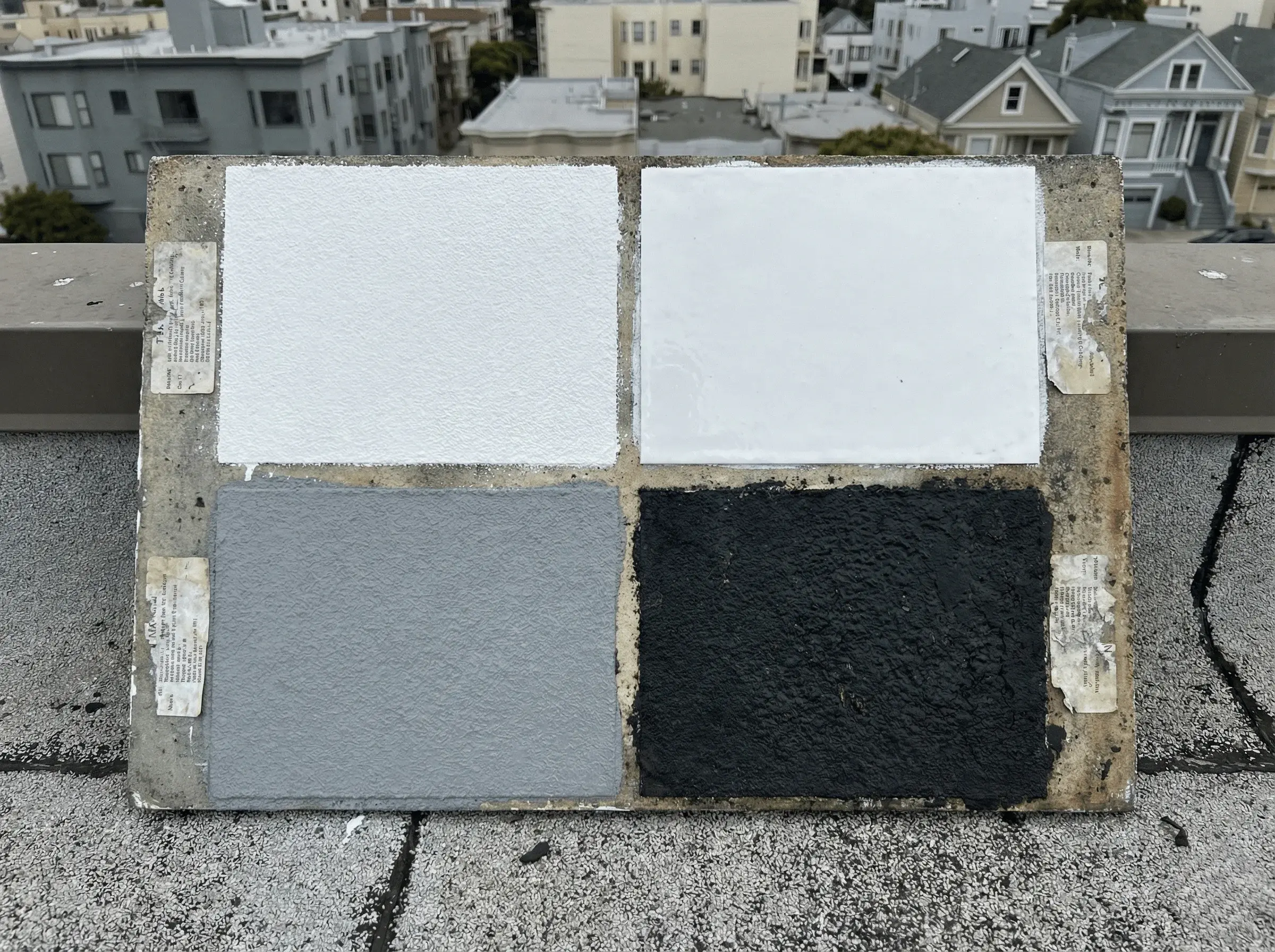
Which coating?
| Coating | Strengths | Typical use |
|---|---|---|
| Silicone | Excellent UV and ponding resistance; bright white | Restoring single-ply, mod-bit and metal roofs, especially with ponding |
| Acrylic elastomeric | Cost-effective, reflective | Well-drained roofs with good slope |
| Polyurethane | Tough and impact-resistant | Roofs with foot traffic or equipment |
We install Gaco’s 100% silicone roof coatings as a Gaco Qualified Applicator. Gaco’s white silicone is rated for California’s Title 24 cool-roof requirements.
What a proper restoration includes
- Moisture survey or cores to find wet areas — which are cut out and replaced.
- Repairs to seams, flashings and penetrations.
- Reinforcement of seams and details with fabric set in coating.
- Cleaning and drying the surface.
- Field adhesion testing to decide whether a primer is needed.
- Application in passes to the specified wet-film thickness, checked with gauges across the roof.
- Documentation — photos, readings and warranty paperwork.
Silicone roof restoration
Cooler buildings, too
Reflective white coatings lower roof surface temperatures on sunny days, which can make top floors more comfortable and reduce cooling loads. Where a reroof triggers California’s Title 24 cool-roof rules, choose a coating with a current CRRC rating.
The honest answer
Some roofs are perfect candidates. Some need repairs first. Some need replacing. The only way to know is to look — with cores and moisture readings, not just eyes. Request a roof evaluation and we’ll tell you which category yours falls into.
Talk to someone who’s been on the roof.
Free assessments across the Bay Area. Written, fixed-price proposals.
Request an assessmentor call (415) 209-5199